
Two days after the attack on the local Church of Jesus Christ of Latter-day Saints in Grand Blanc, Michigan, I ran into a couple of white boys in the market. I specify that they were white because we were in Rabat, Morocco, in the middle of Al-Medina Qadima—the old city—meaning everyone around was brown and Muslim. So these boys, with their American accents, stuck out to me. It’s nice to see someone with whom you have much in common.
They told me and my friend that they were from Michigan. Close to my home, Wisconsin. We were all Midwesterners. The attack was fresh on my mind, so I mentioned it and asked if they lived close. It was one of their hometowns. I expressed condolences and told them that it was a church of my faith that was attacked. They expressed condolences back. They said they were Christian and their churches had been praying for ours. Wow, looks like we really did have a lot in common.
We all stuck around and kept chatting for a while. One of them eventually turned to me and asked what Mormons believe in.
I’ve talked to enough evangelicals to know how similar our beliefs are. So I repeated the point I had been thinking—that we had a lot in common. We both believe in Christ. We believe He is the only path to salvation. We believe He marked the way. We believe in grace.
He asked me what made us different, so I told him that we didn’t believe in the Trinity the same way that evangelicals usually do, and we also believe that the Book of Mormon adds testimony to the truths in the Bible, adding a second witness to the Gospel.
Do we have faith that Jesus judges others correctly, or do we need to do it for Him?
The words then tripped off his tongue so easily. “So you’re not really Christian, are you?”
I said no, we believe in Christ—we believe He is God, we believe He is the way, the truth, the life, the light, we believe in His Gospel and try to live His teachings. We believe in Him.
“But just differently than Christians do,” he said, a laugh creeping into his tone. Later in the conversation, he says that anyone who is not Christian will go to hell.
I have heard those words countless times before. Old men yelling at me on my mission in Arizona—me, a teenage girl, trying to share a scripture while spit flies from his face. Evangelical Christian teens my age telling me Satan had deceived me as they repeated denigrating stereotypes. Soccer moms sneering at me, telling me the Book of Mormon adds to the Bible, though the verse that says not to “add or take away from the Gospel” comes from Revelations—which was added before many other books in the Bible.
They all say so many things. You’re not Christian. You’re going to hell. You belong to a cult. You are brainwashed.
I have also read those words countless times on social media. Even in the immediate aftermath of the shooting in Michigan, Christian Instagram influencer Josh Benson posted a video mocking Joseph Smith while also spouting misinformation about the Prophet’s plural marriages—and also entirely disregarding the existence of plural marriage in the Bible. His post’s comment section was full of people calling Mormonism a “demonic cult.” In the comment sections of Latter-day Saint influencers—people fighting, calling members demons, harbingers of hell, pedophiles.
There were similar comments on an article from the Washington Post, which reported that Latter-day Saints had raised over $300,000 for the family of the deceased shooter, in addition to the families of the victims—That’s so weird. Bad move, Mormons. Mormons are pedos. They’re nice people, but they’re going to hell. They belong to a demonic cult. Don’t be deceived by their nice actions. Satan is leading them so that they act nice and look nice, but they are evil and they will deceive you if you listen to them.
Most of these commenters were Christian.
Many of them said we are not Christian, and that this difference, and our lying about it, justifies the verbal abuse, because we are deceiving others.
(As an aside: I refer to those Christian commenters by their chosen label, because I believe that Jesus knows them better than I do and what is in their hearts—He, not I, knows if they are Christian or not.
But this boy, who stood in front of me in the Medina Qadima, who never met me before in my life, seemed to believe that he knew me and all my life history better than Jesus does.)
In front of this boy, I found myself biting my tongue. I wanted to tell him so many reasons that I don’t think he is a real Christian—because he doesn’t seem to be loving me sincerely or meeting me where I’m at. But my desire is misdirected (and not Christlike).
And it’s not really about this boy. It’s about all the other people I have met who are unable to give their judgment to Jesus. It’s about all the other people who have tried to debate me into losing my beliefs, assuming that they are smarter and wiser than me and that I have not researched, studied, or poured years of my life into understanding my faith so that I can be sure it connects me with Christ. It’s about all the people who have thought that yelling might convince me that they were connected with Christ. Who have told me I will go to hell and called me a servant of Satan or a demonic cult member while I stood on their doorstep as a nineteen-year-old missionary.
Every time this happened, it scared me. Every new rumor I heard about my faith drove me to study deeper, to pray harder, to scrutinize my belief system. Eventually, my study drove me deeper into the arms of my faith. I felt Jesus where I was. I felt His love, and I learned as a missionary that, if I showed others that love, then they were likely to join our Church, knowing that they could feel His love there because of my example.
I have also learned from these experiences—more than anything—that criticizing someone’s beliefs without love or understanding does not work.
And this is important. I did not feel as if this boy understood me. He did not know what I have gone through to have the beliefs I do today. And I had focused on pointing out what we had in common; he focused on pointing out that we were not the same. Basically, he “othered” me, and in doing so, he led me to believe that he did not care about me. He drove me away from listening to him.
If he had borne his testimony to me, I would have thought: This is irrelevant to me because he is bearing his testimony to the version of me in his mind, not me in actuality. I would have thought: He does not care about me. He just wants to win. This is not a testimony of love because he does not know me or take the time to listen to me. If his church does not help him love, then it must not be the church of Jesus.
This raises three questions for all Christians in the wake of the Grand Blanc shooting.
Do we have faith that Jesus judges others correctly, or do we need to do it for Him?
Do we believe that Jesus listens to others to love, understand, and help them, or that He listens to others with criticisms on the tip of His tongue?
Do we genuinely believe that other people can be as good, worthy, and intelligent as we are, or do we, before we know them or meet them, classify them as less than ourselves?
It is saying no to these questions that leads to a desire to other them.
It is othering others that leads to dehumanizing them.
It is dehumanizing someone that lets you spit at them and tell them that they are members of a demonic cult.
It is calling someone a demon that justifies you in driving families from their homes in the middle of the night, as happened back in the beginning of the Church’s modern history in Missouri.
The same thing motivates you to issue an extermination order for all members of one faith.
To burn down their sacred temples.
To tar and feather them.
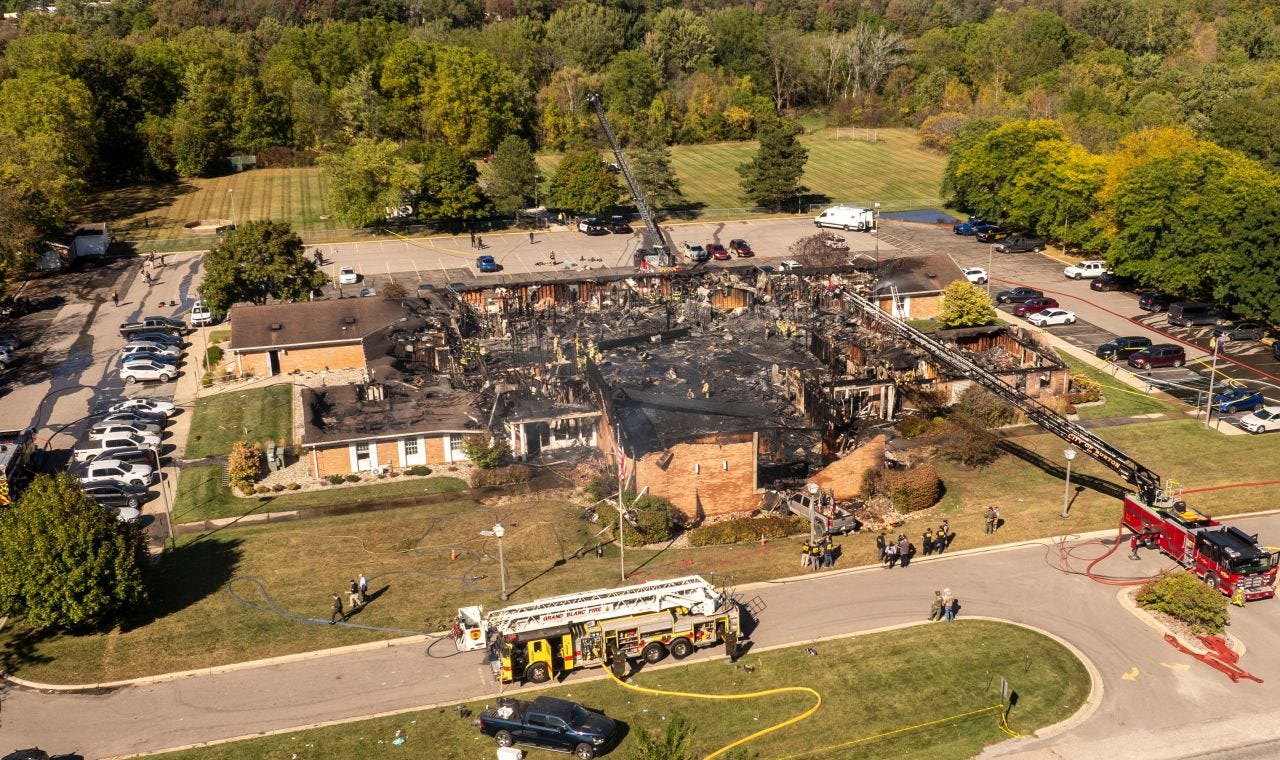
It is the same train of thought that led a man to drive his truck into the church in Grand Blanc, unleash gunfire, and set the chapel on fire.
(Another aside: I do not believe that this boy, in the Medina Qadima, would have done the same—I assume that he knows himself better than I do, and when he says he is Christian, he really does try to follow Christ.
I wish he thought the same thing about me.)
It is othering others that leads to dehumanizing them.
On the other side of the token: it is members of the Church of Jesus Christ of Latter-day Saints that follow the same pattern that engage in Instagram wars with Internet warriors.
It is members following the same pattern that judge LGBTQ+ saints in their ranks.
It is members following the same pattern that have to bite their tongue, staring at a fellow American Christian, in the Medina Qadima.
Essentially, it is people who do not follow Jesus Christ’s example that do not become like Him. Your Christian label does not matter—it is your Christian actions.
As General Conference goes on this weekend, I pray to have my heart opened and my eyes unlocked. I pray to become more Christian. I pray to love Him better and let Him work in my heart.
“I am the good shepherd; I giveth my life for the sheep.
“And I give unto them eternal life; and they shall never perish, neither shall any man pluck them out of my hand.
“My Father, which gave them me, is greater than all; and no man is able to pluck them out of my Father’s hand.
“I and my Father are one.
“Then the Jews took up stones again to stone him.
“Jesus answered them, Many good works have I shewed you from my Father; for which of those works do ye stone me?”
John 10:11-32